
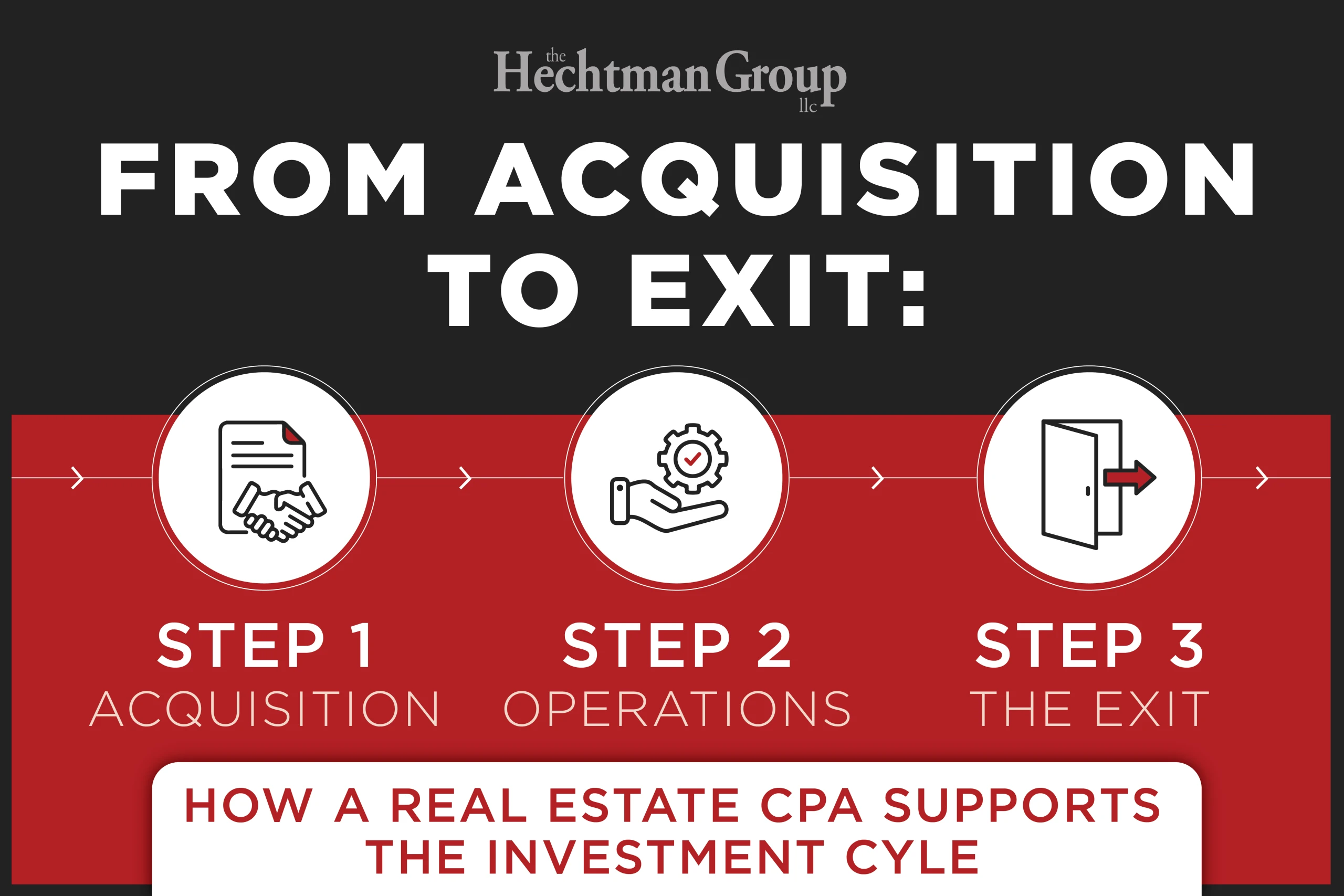
Real estate investment is a high-stakes environment. Owners often move quickly between conducting due diligence on new purchases, overseeing property operations, and navigating exits. This fast-paced cycle makes it easy to focus on the transaction at hand while inadvertently overlooking how those choices affect future profitability.
A real estate CPA provides the oversight to connect these stages. Rather than treating tax and accounting as a year-end checklist, a lifecycle approach ensures that every decision – from the initial purchase to the final exit – is made with a clear understanding of the long-term financial implications.
1. The Acquisition Phase: Setting the Foundation
Many critical tax decisions are made before a property even closes. Once a deal is finalized, certain structural advantages are locked in, making it difficult, and sometimes costly, to pivot later. By engaging a real estate accountant in the due diligence phase, investors can lay a foundation to support their broader financial goals.
Strategic planning during acquisition focuses on three primary areas:
- Entity Selection: While an LLC is a common starting point, tax classifications like a partnership should be considered based on the investor’s existing portfolio and future exit strategy.
- Proactive Tax Modeling: It is essential to understand how a new asset impacts total tax liability. Modeling various scenarios helps anticipate how the property’s income or losses will flow through to individual or corporate returns.
- Advisory Review of Pro Formas: A CPA identifies tax-efficiency gaps to ensure projected cash flows account for realistic tax obligations and immediate deduction opportunities.
Establishing the right structure at acquisition ensures the asset is positioned for maximum efficiency throughout its lifecycle.
2. Operational Management: Maximizing Performance and Cash Flow
The holding period presents the biggest opportunity to protect an investment’s rate of return. While property management handles day-to-day operations, a real estate CPA focuses on the strategies that optimize cash flow through proactive tax planning.
A focused accounting strategy during this phase includes:
- Accelerated Depreciation: Strategies such as cost segregation allow investors to front-load depreciation deductions. This approach improves an investment’s present value by reducing tax liability in the early years of ownership.
- Classification Oversight: Accurate classification of property improvements helps maximize immediate deductions while managing compliance risks. This distinction between repairs and capital improvements is vital for maintaining a clean tax trail.
- Loss Limitation Monitoring: Passive activity rules often restrict the immediate use of property losses against other income sources. Ongoing planning helps coordinate these deductions with taxable gains elsewhere in the portfolio to maximize their utility as permitted by the tax code.
- Multi-State Coordination: For investors operating across state lines, managing various state-level filing requirements is essential to avoid unexpected liabilities or penalties.
This level of oversight helps prevent tax inefficiencies from eroding an asset’s performance over time.
3. Disposition and Reinvestment: The Strategic Exit
A successful exit depends on a clear strategy for the proceeds from the sale. Tax liabilities triggered by a sale, such as capital gains and depreciation recapture, can significantly reduce net profit. A real estate accountant identifies these liabilities early so investors can evaluate the most efficient path forward.
Strategic exit and reinvestment planning often involves:
- Mitigating Recapture and Gains: Calculating the potential tax impact before a sale enables better-informed timing decisions. This preparation helps align the sale with other portfolio fluctuations to manage the total tax liability.
- 1031 Exchange Evaluation: To maintain investment momentum, a 1031 exchange defers taxes by allowing proceeds to be reinvested in like-kind property. A CPA coordinates the timing and documentation required to maintain compliance.
- Loss Harvesting: Analyzing the broader portfolio often reveals opportunities to match gains from a property sale with accumulated passive losses or other investment offsets, reducing the immediate tax burden.
Coordinating the exit with the next acquisition helps investors defer tax liabilities and preserve capital for future growth.
Integrated Planning Across the Investment Lifecycle
Successful real estate investment requires year-round coordination rather than reactive, seasonal compliance. Treating acquisition, operations, and disposition as a single, connected lifecycle leads to more predictable financial outcomes and fewer tax-season surprises.
The Hechtman Group provides the technical oversight and experience necessary to manage these moving parts. By acting as a strategic partner, we help ensure that every phase of the investment lifecycle supports long-term wealth preservation. To discuss how an integrated tax strategy can support your portfolio, contact The Hechtman Group for a consultation.
FAQs
How does a real estate CPA help with property acquisitions?
A real estate CPA reviews the financial and tax implications of an investment before the deal closes. This includes determining the most efficient tax classification for the holding entity, modeling how the asset affects total tax liability, and identifying opportunities for immediate deductions. This approach establishes a tax-efficient structure before the ownership terms are finalized.
What are the tax advantages of hiring a specialized real estate CPA?
Specialized real estate accounts understand the unique nuances of the real estate tax code, such as depreciation rules and passive activity limitations. This expertise allows them to move beyond basic tax preparation and focus on strategic, long-term planning. Investors benefit from an accounting professional who can identify tax opportunities that a generalist might overlook.
Which entity structure is best for a growing real estate portfolio?
The ideal structure depends on the investor’s long-term goals and existing asset mix. While a single-member LLC offers simplicity, a growing portfolio often requires more sophisticated arrangements:
- Limited Partnerships: Often used to bring in outside capital while maintaining control, these allow flexible profit-and-loss allocations tailored to different investor needs.
- S-Corps: These can be effective for managing the “dealer” status of high-volume flippers or for segregating management fees to reduce self-employment tax.
- Multi-Tiered Structures: Some investors use a holding company that owns individual property LLCs, centralizing management and tax reporting while isolating the liabilities of each asset.
How do real estate CPAs assist with 1031 exchange compliance?
A 1031 exchange requires strict adherence to IRS timelines and documentation rules to successfully defer capital gains taxes. A real estate CPA coordinates with the qualified intermediary to ensure all deadlines are met and that the replacement property meets like-kind requirements. This oversight protects the tax-deferred status of the transaction.